
Orangeburg pipe replacement cost is usually $4,000 to $12,000 for a sewer line that runs 40 to 80 feet, says Quality Sewer & Drain. Two things set your final bill: the length of your line and the replacement method the crew picks. After a company inspects the pipe, it will quote you a firm price.
What is Orangeburg pipe?
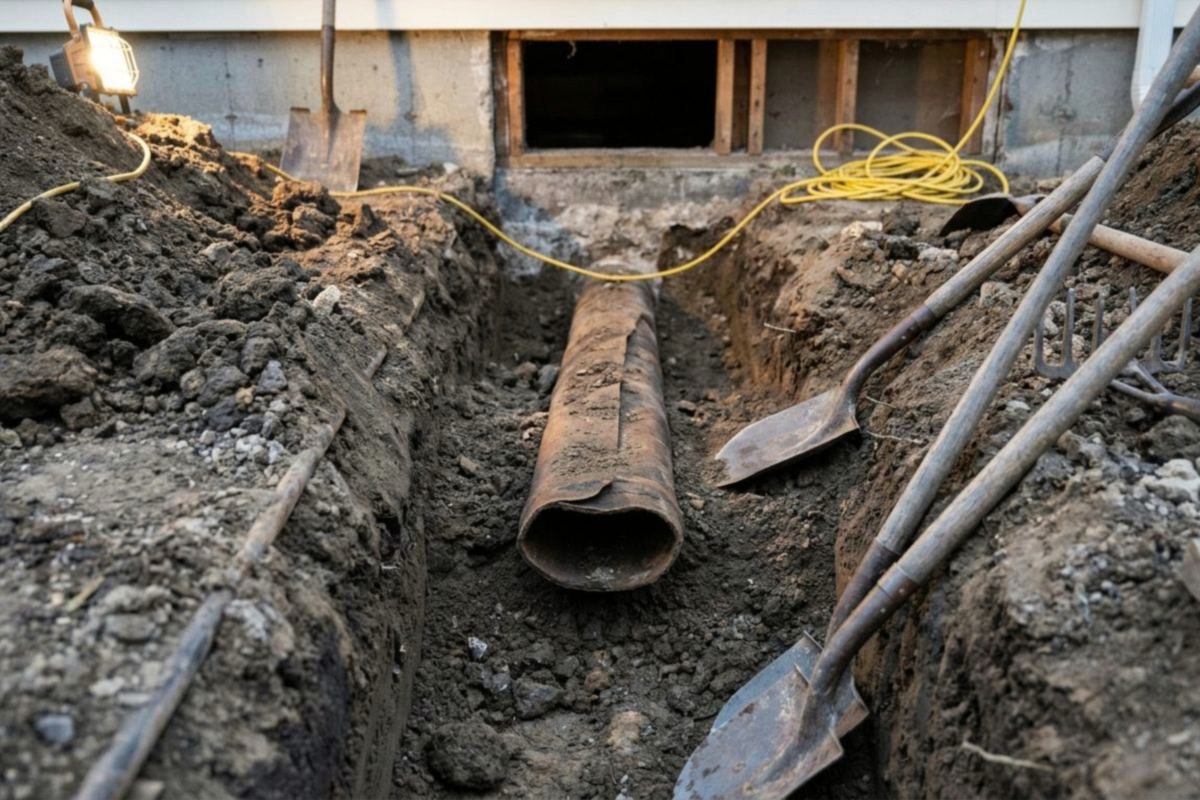
Orangeburg is a sewer pipe built out of tar paper. As Wikipedia explains, it was made by pressing layers of ground wood pulp together with tar pitch. Homes got it between 1945 and 1972.
You won't find this pipe inside the house. It sits buried outside in the sewer line that runs from your home out to the street. A camera inspection is the sure way to tell if your line has it. A small camera travels the length of the line while the crew follows along on the screen.
How the pipe fails
As the decades pass, the tar paper takes on water and goes soft. The pipe's round shape gradually flattens into an oval, and once that happens, tree roots find their way inside.
That's why replacing it is the standard fix instead of patching it. Soft, flattened paper won't keep a repair in place for long.
Cost per foot by method
Sewer work gets priced by the foot, so the longer your line, the more you pay. These national ranges come from Angi.
| Method | Cost per foot |
|---|---|
| New pipe in an open trench | $60 to $250 |
| Lining the pipe | $90 to $250 |
| Bursting the pipe | $60 to $200 |
With pipe lining, a coating is applied to the inner walls of the old pipe, and it cures into a brand new pipe. With pipe bursting, a new pipe gets dragged through the old one and breaks it apart along the way.
What does a 60-foot line cost?
Say your line runs a typical 60 feet from the house to the street. Here's what each method adds up to. Every figure includes a camera inspection.
| Method | What 60 feet costs |
|---|---|
| Digging up the line | about $3,700 to $15,500 |
| Bursting the pipe in place | about $3,700 to $12,500 |
| Lining the pipe in place | about $5,500 to $15,500 |
These ranges span so widely because rates vary quite a bit by region. A company that has actually viewed your line can turn the range into one fixed number.
Can you replace Orangeburg without digging up the yard?
In many cases, yes. Lining and bursting are what's known as trenchless methods, so the crew only needs a few small access holes rather than a long ditch. Angi points out that trenchless replacement leaves your lawn, your driveway, and the rest of your property untouched.
Not every pipe qualifies, though. If a line has serious issues, like a collapse or a bad slope, trenchless won't work and digging is the only route. The camera inspection shows which methods apply to your situation, so get one done before you start weighing estimates.
Orangeburg at a glance
- Used: 1945 to 1972
- Where you'll see it: Underground, between the house and the street. A camera inspection shows it.
- How it fails: The tar paper soaks up water, softens and squashes into an oval, then roots get in.
- What to do: Replace it.
Details from expresssewer.com.
Common questions
Is Orangeburg pipe something you should replace?
Most of the time, yes. The City of Ann Arbor, which permitted Orangeburg between 1949 and 1970, says replacement is often the only fix that truly holds up.
What is the lifespan of an Orangeburg pipe?
The design life was 50 years, but in the real world it has tended to give out around the 30-year mark, Express Sewer & Drain reports. Since the final installations happened in 1972, any Orangeburg still working today has outlasted both numbers.
Is it wise to buy a house with Orangeburg pipe?
Yes, as long as you go in with your eyes open. Express Sewer & Drain recommends a sewer inspection for any home built before 1980, and if the camera turns up Orangeburg, you can subtract that estimate from what you offer.
Which method is right for my house?
That decision comes from the camera inspection. Lining or bursting can still work if the pipe has merely softened and gone oval. If it has collapsed or the slope is off, the crew will have to dig a trench.