
Galvanized pipe replacement means taking out the old galvanized steel pipes in your home and putting in PEX, copper, or CPVC instead. For a single-floor home of 1,800 sq ft with 2 bathrooms, expect a new PEX system to run roughly $6,400 to $11,800 at typical US plumber pay rates. Most jobs like this take 2 to 3 days.
How to tell your galvanized pipes are failing
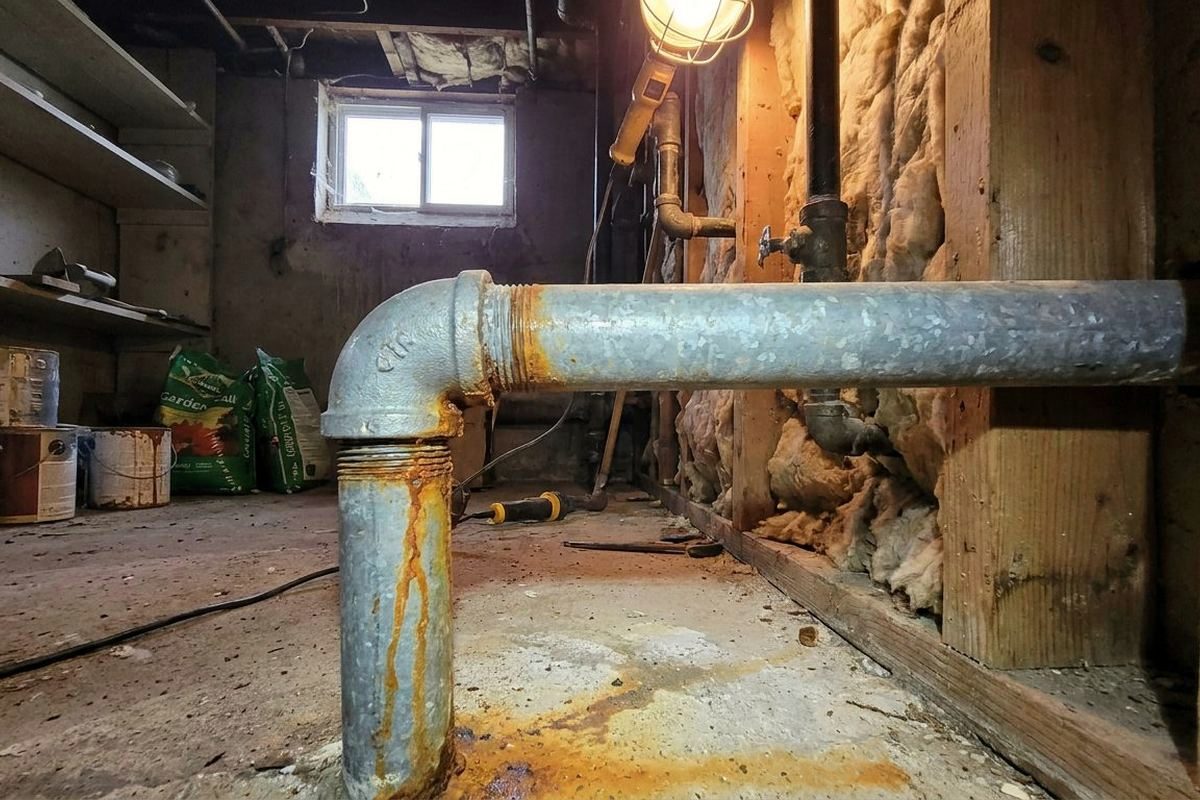
The telltale signs are rusty-looking water, weak pressure, and leaks where the threaded fittings meet. Galvanized pipe is simply steel with a layer of zinc on it. When that zinc layer is gone, the steel starts to rust from the inside out, which shrinks the opening in the pipe and eventually leads to leaks.
Houses and other buildings going up before the 1960s often got this pipe. Its working life is roughly 40 to 50 years, which means plenty of these systems have outlived it. Check near your water heater, beneath sinks, or down in the basement. You'll know it by its threaded ends and dull gray color, and a magnet will cling to it.
What does galvanized pipe replacement cost?
The figures here assume a one-story home sitting over a crawl space, new PEX throughout, and average US plumber wages. PEX is bendable plastic tubing for water lines, colored red for hot and blue for cold in most cases. A crawl space is the shallow, open area underneath the house's raised ground floor.
Here's what you can expect depending on your home's size and how many bathrooms it has:
| Bathrooms | Square footage | Cost | Time |
|---|---|---|---|
| 1 | 1,200 square feet | between $4,100 and $7,700 | two to three days |
| 2 | 1,800 square feet | between $6,400 and $11,800 | two to three days |
| 3 | 2,400 square feet | between $7,500 and $14,400 | three to four days |
| 4 or more | 3,200 square feet | between $10,600 and $21,200 | four to five days |
Where you live matters too, because plumber pay differs from state to state. For a 2-bathroom, 1,800 sq ft home, here's roughly what you'd pay in different states:
| State | Plumber pay per hour | Cost |
|---|---|---|
| Florida | $26.94 | between $5,400 and $9,900 |
| Texas | $29.22 | between $5,700 and $10,500 |
| Arizona | $32.66 | between $6,100 and $11,300 |
| California | $39.58 | between $7,000 and $13,000 |
| New York | $40.29 | between $7,100 and $13,100 |
| Washington | $42.69 | between $7,400 and $13,700 |
Keep in mind these are estimates. Once a repipe company looks at your house in person, it quotes you a firm price.
What type of pipe should replace your galvanized pipes?
PEX, copper, and CPVC all work as replacements. CPVC is hard plastic pipe in a cream or tan shade, while copper is a metal pipe that gets soldered together. The way your home is built affects the final bill too.
A slab means a concrete floor poured right onto the ground, with pipes running beneath it or embedded in it. Every figure below assumes 2 bathrooms, 1,800 sq ft, and US average wages.
| Pipe | Home | Cost | Time |
|---|---|---|---|
| PEX | One floor, crawl space | between $6,400 and $11,800 | two to three days |
| CPVC | One floor, crawl space | between $7,400 and $12,800 | two to three days |
| Copper | One floor, crawl space | between $9,400 and $18,800 | three to five days |
| PEX | One floor, slab | between $8,300 and $16,300 | two to three days |
| PEX | Two floors, crawl space | between $7,000 and $13,200 | two to four days |
Replacing a galvanized service line
The underground line bringing water to your home can be galvanized as well. It's billed apart from the interior repipe, and a permit is already built into each number here.
For the line itself, length and digging method drive the price:
| Line length | Method | Cost |
|---|---|---|
| 50 feet | Trench | between $2,700 and $8,000 |
| 50 feet | Trenchless | between $3,900 and $8,000 |
| 100 feet | Trench | Roughly $5,200 to $15,500 |
The math behind these estimates
Our estimates start from your home's size and number of bathrooms. We then adjust for the pipe you choose, what plumbers earn in your state, and whether you have a slab or a second floor.
The wage data comes from the Bureau of Labor Statistics and covers all 50 states plus the District of Columbia.
Galvanized steel at a glance
- Used: up to the 1960s
- Where you'll see it: Threaded dull gray pipe at the water heater, under sinks and in the basement. A magnet sticks to it.
- How it fails: The zinc coating wears off and the steel rusts inside, so the pipe narrows and leaks at the joints.
- What to do: Plan to replace it.
Details from squareone.ca.
Common questions
What does it cost to replace every galvanized pipe in a house?
A national guide lists $1,500 to $15,000 for a typical home. Your place in that range comes down to size, bathroom count, pipe material, number of floors, and state.
Are galvanized pipes worth replacing?
It's generally worth it when low pressure, discolored water, or leaks appear in more than one spot around the house.
Does insurance pay for galvanized pipe replacement?
A national guide doesn't say insurance covers the job. In fact, some insurers may require copper or plastic pipe in place of the galvanized before they'll agree to cover your home.
Do more bedrooms raise the price?
No, repipes are quoted by bathrooms and square footage, not bedrooms. A house with 3 bedrooms typically has 2 bathrooms.