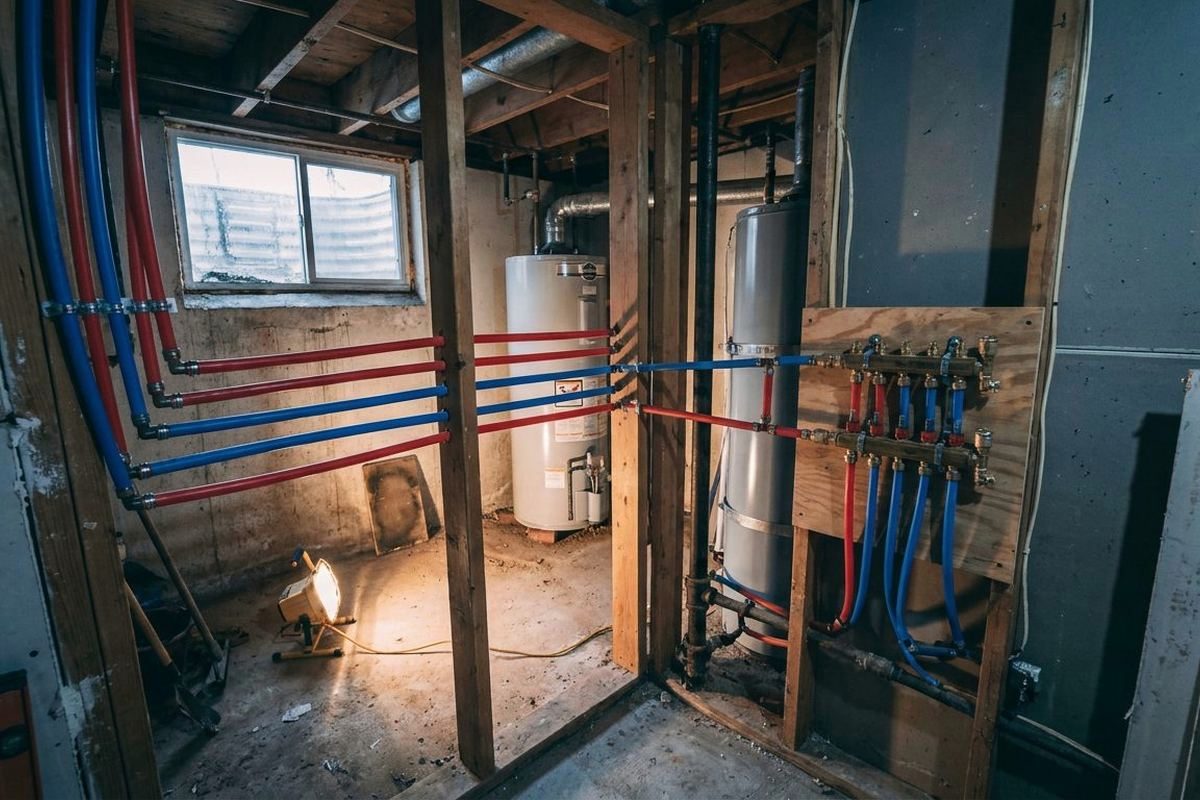
A whole-house repipe in Arkansas runs about $5,100 to $9,300 when the house is 1,800 sq ft with 2 baths on one floor, using PEX. PEX is a bendable plastic pipe for water, red on hot lines and blue on cold. That is lower than the US average estimate of about $6,400 to $11,800, because Arkansas plumbers earn less per hour than plumbers in any other state or DC.
Why a repipe costs less in Arkansas
Roughly 70 % of a repipe bill goes to labor, so nothing moves the price like the local wage. An Arkansas plumber makes $24.35 an hour, which is about 30 % under the US average of $34.70.
At the average US wage, that same house runs about $6,400 to $11,800. Here it lands between $5,100 and $9,300. In Texas, this site's calculator gives about $5,700 to $10,500 for the same house. In California, the range sits near $7,000 at the low end and $13,000 at the top.
Arkansas repipe prices by house and pipe
This site's Arkansas calculator produced the numbers in the table. Each figure covers the new pipe plus the plumber's labor.
| Home | Pipe | Beneath the floor | Roughly |
|---|---|---|---|
| 1,200 sq. ft., 1 bathroom, 1 floor | PEX pipe | Crawl-space | $3,200–$6,100 |
| 1,800 sq. ft., 2 bathrooms, 1 floor | PEX pipe | Crawl-space | $5,100–$9,300 |
| 1,800 sq. ft., 2 bathrooms, 1 floor | CPVC pipe | Crawl-space | $5,900–$10,100 |
| 1,800 sq. ft., 2 bathrooms, 1 floor | Copper pipe | Crawl-space | $7,400–$14,900 |
| 1,800 sq. ft., 2 bathrooms, 1 floor | PEX pipe | Slab | $6,600–$12,900 |
| 2,400 sq. ft., 3 bathrooms, 2 floors | PEX pipe | Crawl-space | $6,400–$12,800 |
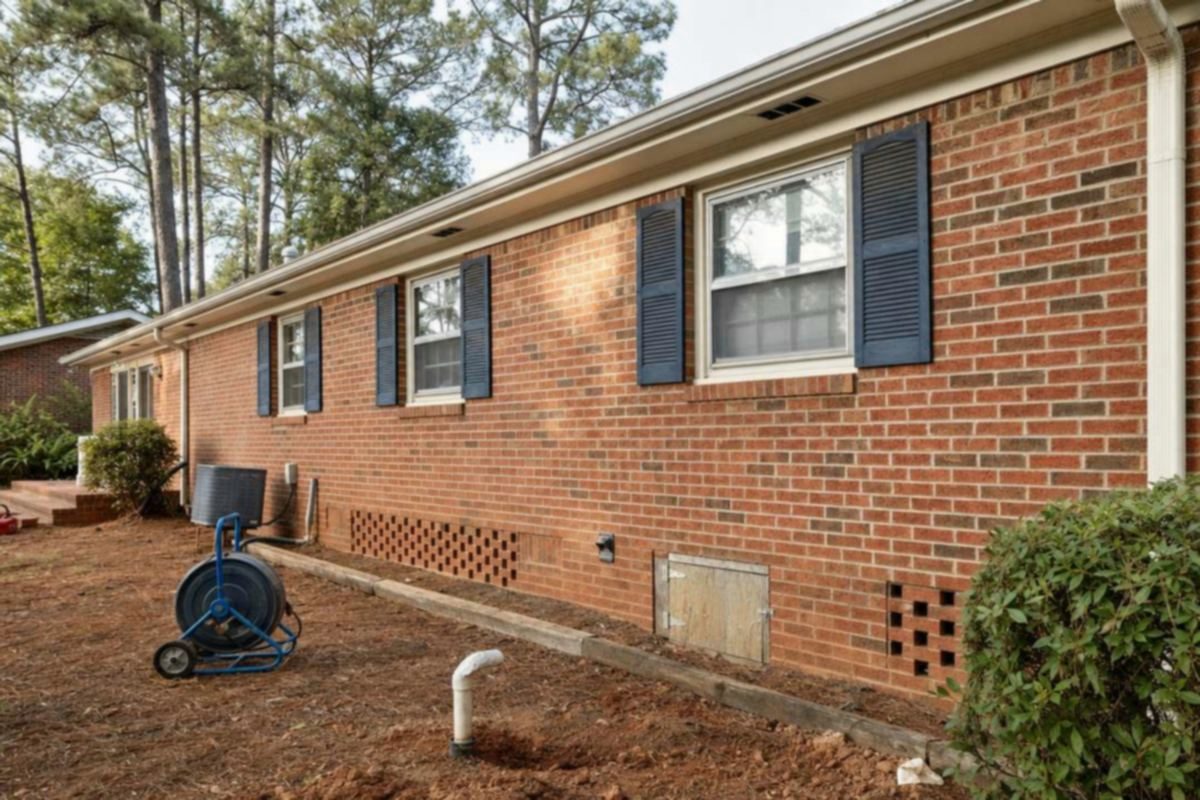
A crawl space is that shallow gap beneath a raised floor. A slab means a concrete floor laid right on the ground, with the pipes below or inside it, and that's why slab homes cost more.
Bedrooms don't affect the number, because repipes get priced by bathrooms and square footage. Two bathrooms is what you'll usually find in a 3-bedroom house.
What old pipes are common in Arkansas homes?
Half of the homes in Arkansas are newer than 1988. That makes the state's housing stock on the young side, 40th of 51 when states are ranked oldest to newest. Newer doesn't always mean better pipe, since many Arkansas homes were built in the years when polybutylene and Kitec were being installed.
Homes built from 1980 to 1999 account for 29.2 % of the state. That window covers the polybutylene years, 1978 to 1995, and the first stretch of Kitec, 1995 to 2007. The site's pipe identifier can tell you if you have either one.
Another 13.1 % of Arkansas homes date from before 1960, when galvanized steel water pipe was the norm. Homes built in 2000 or later make up about 31.3 %.
This site's pipe identifier can name 8 pipe types by how they look and feel: polybutylene, Kitec, galvanized steel, copper, PEX, and CPVC among them. Was your house built between 1980 and 1999? Call now and a repipe company near you will come see the house and give you a fixed price, and this site charges you nothing for the call.
When it makes sense to repipe
One leak under a sink is just a repair. But once weak pressure, discolored water, or leaks start showing up in several parts of the house, a repipe is usually worth it.
Staying home while the crew works
Families mostly stay put through the whole job. Take a 2-bath house in PEX above a crawl space: this site's calculator puts the work at about 2 to 3 days. A bigger house, 3 baths and 2 stories, usually needs 3 to 5 days.
Extra costs worth asking about
Permits can cost $50 to $800, per a national guide. The same guide also found a gap of $2,000 to $5,000 between quotes for the same work, so learn what each price covers before you pick one.
How to check an Arkansas plumber's license
The state licenses its plumbers through the Arkansas Department of Health, under its Plumbing and Natural Gas section. Look your plumber up there before signing anything.
Arkansas follows a plumbing code of its own
Arkansas doesn't borrow its rules from elsewhere. New pipes and repairs statewide can't fall below the Arkansas Plumbing Code, which serves as the minimum. The 2018 Arkansas Plumbing Code is what the Health Department's exam guide goes by. Permits and inspections must be run by your local water or sewer system, which is often the city. The state is able to act in places that lack an inspector. An owner may plumb the home they own and live in without a license, unless the city says otherwise.
Private wells serve about 15 percent of the nation, yet only 4.9 percent of Arkansans get water that way. The well seal can't be broken by a plumber working on a well. A licensed well contractor must handle pump swaps.
Getting one set price for your house
The calculator works from a typical house. Your own walls, floors, and pipe set the real figure. When you call, you reach a repipe company serving your area, and the call costs you nothing through this site. The company sees the house, then gives you a fixed price.