A repipe in North Dakota costs less than in most other states, and when a house was built tells you a lot about what's inside its walls. Plumbers in the state make $31.81 an hour, roughly 8 % under the US average of $34.70. Half the homes in the state date from 1983 or earlier, and 22.9 % went up before 1960, when galvanized steel was common for water pipes. The call puts you in touch with a repipe company serving your area. Once someone looks at the house, you get a fixed price, and this site never takes a penny from you for connecting.
Which old pipes might be waiting in a North Dakota home?
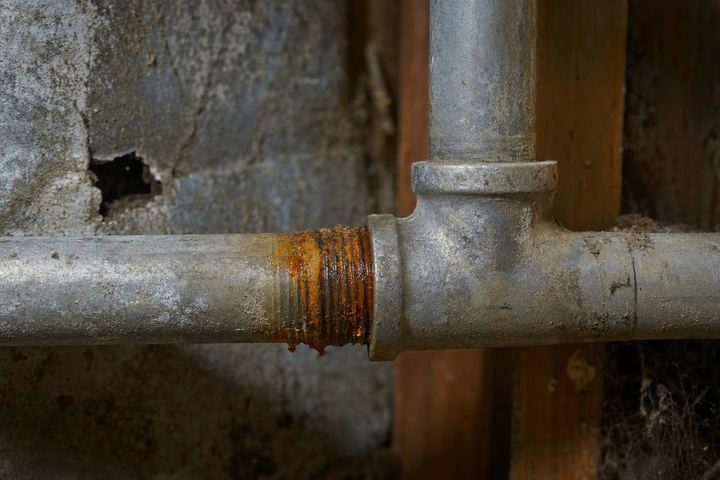
If your house was built before 1960, galvanized steel water pipe is worth checking for, but its age alone cannot tell you what pipes it has now. About 22.9 % of homes in the state, nearly 1 in 4, were built before 1960.
Another 20.1 % of homes were built between 1980 and 1999. Those years fall within the polybutylene era, which ran from 1978 to 1995, and overlap the early years of Kitec, which ran from 1995 to 2007. Newer houses (those from 2000 onward, 33.5 % of the state) rarely have either kind.
Repipe prices in North Dakota
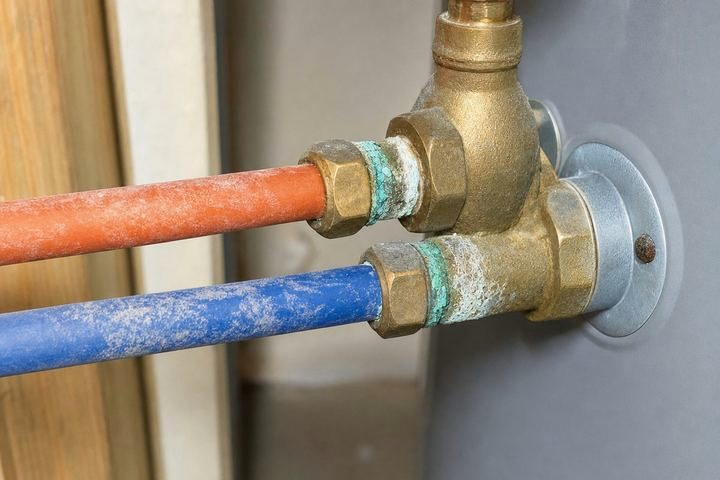
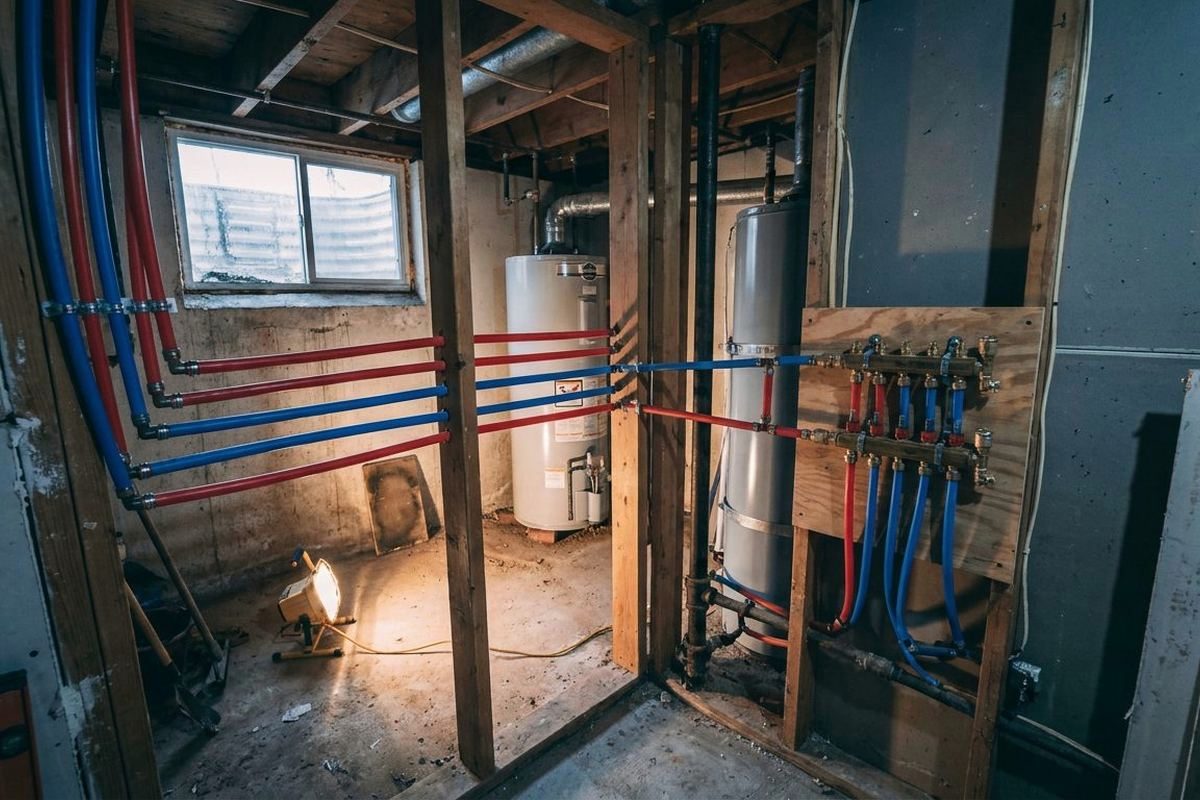
These estimates come from the calculator on this site, based on the house described; the repipe company confirms a fixed price once it has viewed your home. PEX is bendable plastic water pipe, typically red on hot lines and blue on cold ones.
| House | Pipe | Typical cost |
|---|---|---|
| 1,200 square feet, 1 bathroom, crawlspace | PEX | roughly $3,900–$7,300 |
| 1,800 square feet, 2 bathrooms, crawlspace | PEX | roughly $6,000–$11,100 |
| 1,800 square feet, 2 bathrooms, slab | PEX | roughly $7,800–$15,300 |
| 1,800 square feet, 2 bathrooms, crawlspace | CPVC | roughly $7,000–$12,100 |
| 1,800 square feet, 2 bathrooms, crawlspace | Copper | roughly $8,900–$17,700 |
| 2,400 square feet, 3 bathrooms, 2 stories, crawlspace | PEX | roughly $7,600–$15,200 |
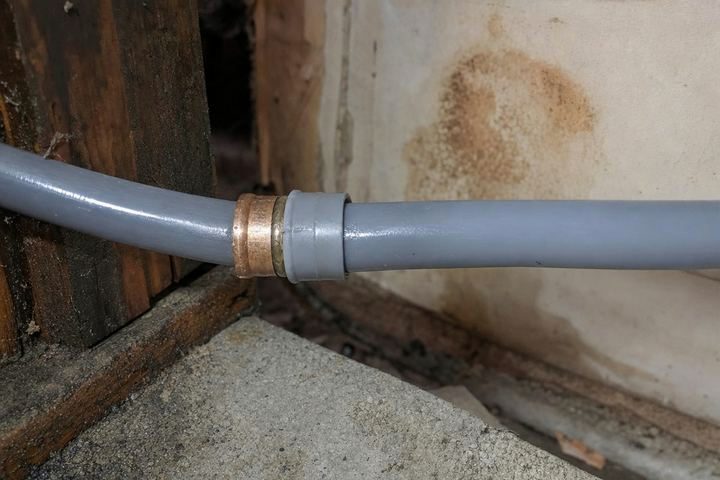
CPVC pipe is hard plastic with a cream or tan color. Copper is metal joined together with solder. A slab means a concrete floor poured right on the ground, with pipes running under it or inside it, which is why the price goes up. A crawl space is the shallow gap beneath a floor raised off the ground.
Bedrooms have no effect on the price. Repipes are quoted based on bathrooms and the size of the house.
What the price covers
Roughly 70 % of a repipe bill is labor, so the wage where you live matters. When you get a quote, ask whether it includes the permit, which a national guide puts at $50 to $800, and whether wall patching is covered.
One national guide finds that bids for the very same job can swing by a few thousand dollars. A quote locked in after someone has seen your house gives you a number you can trust. Call today, and a local repipe crew will look at the house and give you that price, at no cost to you from this site.
Signs a repipe is worth it
According to a national guide, the usual signal is low pressure, discoloration, or leaks appearing in more than one place around the house. When trouble shows up in several spots at once, that points toward a repipe rather than a small patch job.
Families mostly keep living at home while the work happens. A 2-bath house usually needs two or three days of work.
Making sure the plumber is licensed
Licensing for plumbers is handled by the North Dakota State Plumbing Board. Check the plumber on the board's website before signing anything, so you can confirm the license is valid.
Plumbing code and inspections in North Dakota
One plumbing code covers the whole state of North Dakota. The State Plumbing Board adopted the 2018 Uniform Plumbing Code, which it names the 2018 North Dakota Plumbing Code. The board must inspect public buildings and new homes under state law. Within their own limits, cities and counties may inspect work. For older homes, check with your city to see if a repipe gets inspected there. A building with no link to a public water or sewer system doesn't need an inspection. Owners can do the plumbing themselves in a home they live in and own, unless a local rule says otherwise.
Only 6.1 percent of North Dakotans get water from a private well instead of city water. That's far below the national share, which is near 15 percent.
Finding out what pipe you have
You can learn a lot from color and touch. The pipe identifier on this site covers eight kinds of pipe: Kitec, polybutylene, PEX, CPVC, copper, galvanized steel, cast iron, and Orangeburg.