To repipe a New Hampshire home typically runs about $6,000 to $11,100 for a 1,800 square foot, 2-bath house using PEX pipe over a crawl space. Plumbers in the state make $31.84 an hour, roughly 8% under the US average of $34.70, so you can expect labor to cost slightly less here than in most of the country. The call puts you through to a repipe company serving your area. Someone looks at the house first, then gives you a price that won't change. The call costs you nothing on this site.
Old pipes in New Hampshire homes
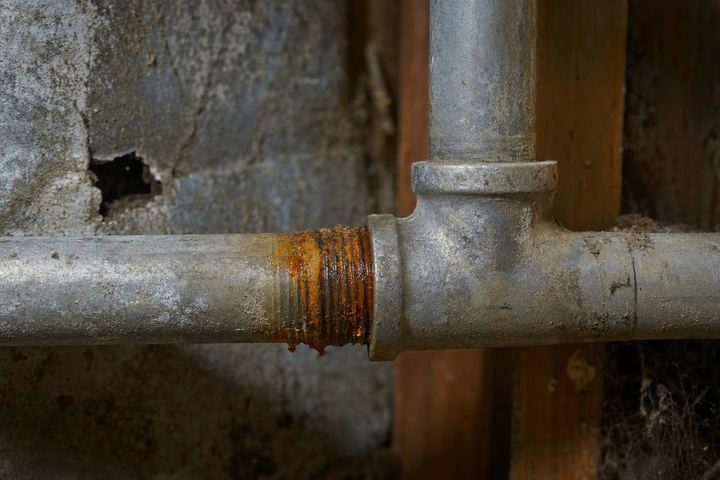
Half the homes here date from 1979 or earlier, and 28.0% go back before 1960. Many of those older homes used galvanized steel water lines, a likely culprit behind weak pressure and brown tap water.
Another 28.9% of houses went up between 1980 and 1999. Those years overlap the polybutylene era (1978 to 1995) and the early run of Kitec (1995 to 2007), a pair of plastic-based pipes with a reputation for giving out. The newest 20.1% of homes date from 2000 onward.
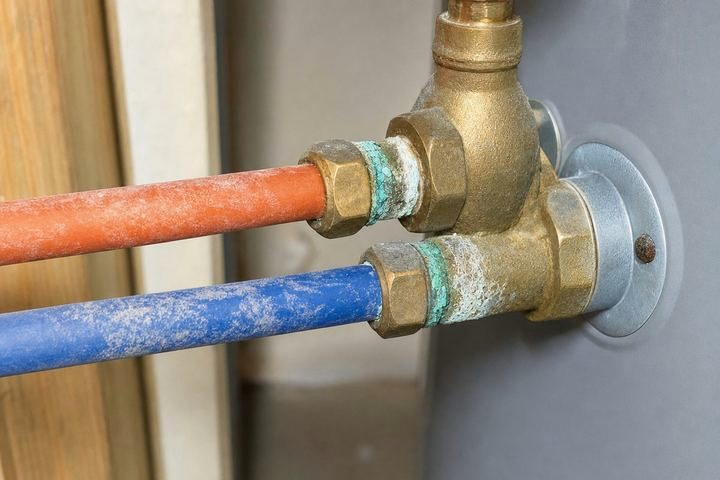
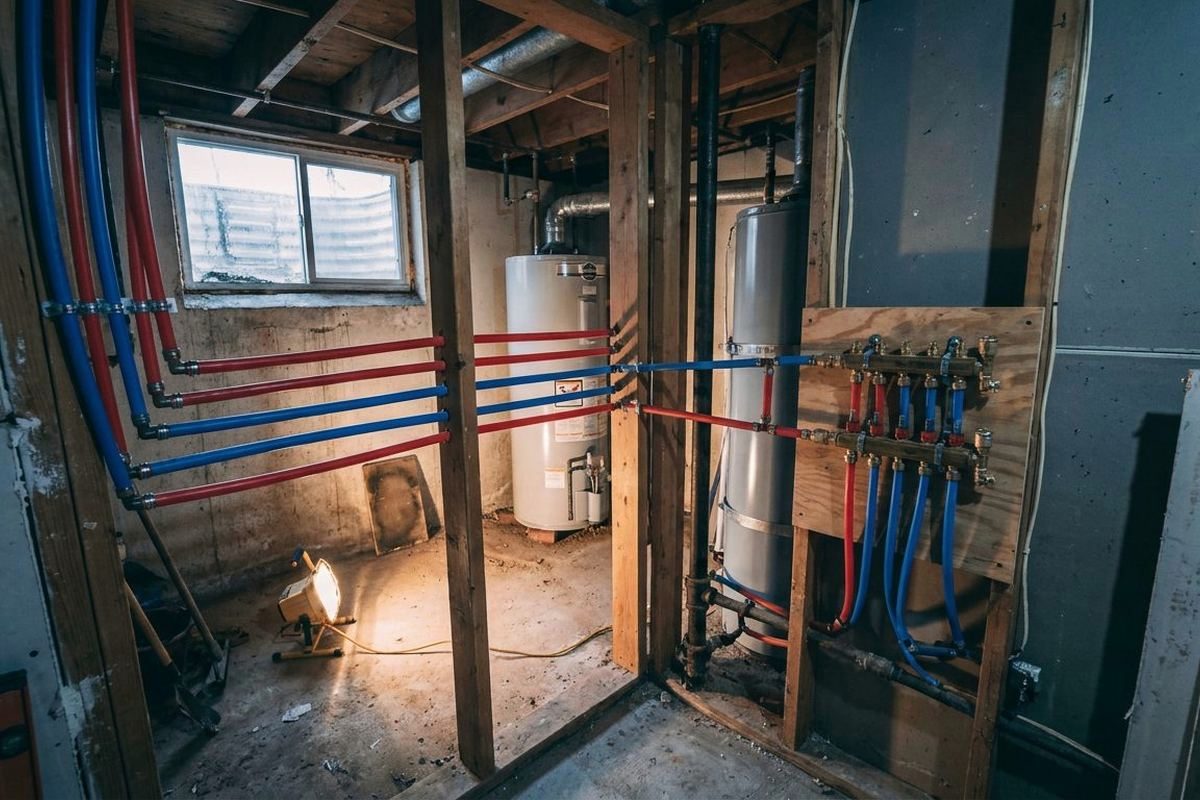
PEX is a bendable plastic water pipe that usually comes red for hot lines and blue for cold. If you're not sure what's in your walls, the pipe identifier on this site can figure it out from the pipe's color and how it feels.
When a repipe is worth it
When the water runs weak, comes out discolored, or drips in a few different spots around the house, repiping is usually the right move, according to Fuse Service. A single leak usually means a small fix will do. Trouble in several rooms at once means the pipes are failing all over.
Cost by house size and pipe type
The numbers below are estimates for New Hampshire, worked out with the calculator on this site. What really sets the price is bathrooms and square footage, not bedrooms. A house with 3 bedrooms normally has 2 bathrooms.
| House | Pipe | About |
|---|---|---|
| 1,200 sq ft home, one bath, crawlspace | PEX | $3,900 to $7,300 |
| 1,800 sq ft home, two baths, crawlspace | PEX | $6,000 to $11,100 |
| 1,800 sq ft home, two baths, crawlspace | CPVC | $7,000 to $12,100 |
| 1,800 sq ft home, two baths, crawlspace | Copper | $8,900 to $17,700 |
| Two-story home, 2,400 sq ft, three baths, crawlspace | PEX | $7,700 to $15,200 |
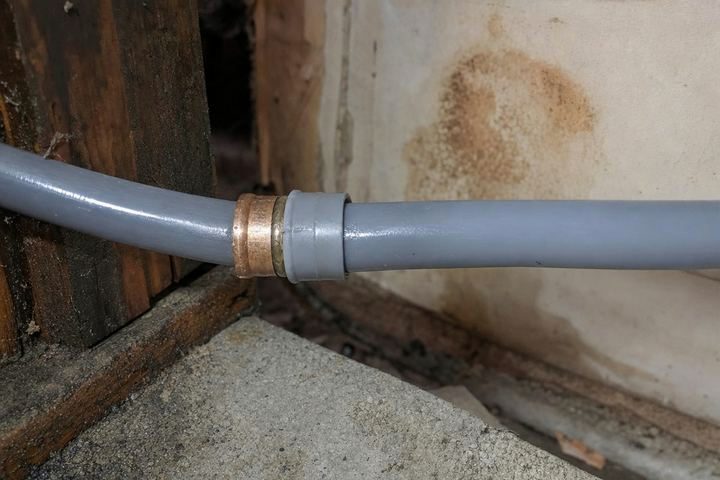
Here's how those pipe types differ. CPVC pipe is stiff plastic in a cream or tan color, while copper is a metal joined with soldered fittings. A crawl space is the short open area beneath a floor raised off the ground. A slab, by contrast, is concrete laid right on the ground, and since the pipes run beneath or inside it, the job gets harder. That pushes the 2-bath house up to about $7,800 to $15,300.
What the price includes
Labor makes up around 70% of a repipe bill, which is why the local wage counts for so much. Permits typically cost anywhere from $50 to $800, per a national guide. That guide also finds that quotes for the very same job can vary by $2,000 to $5,000, so it pays to ask what's included in each one.
When a company that has actually walked through your house quotes a firm price, the guesswork disappears. Call now and you'll be connected with a repipe company in your area.
Staying home while the work happens
Most families stay put through the whole job rather than moving out, according to Repipe Solutions. For a 2-bath PEX house, the calculator puts the job at about two to three days, and a larger two-story home takes 3 to 5 days.
Checking a plumber's license
Plumbers in New Hampshire are licensed by the Office of Professional Licensure and Certification. Search the plumber on the OPLC website before signing anything, so you can confirm the license checks out.
Private wells and New Hampshire's statewide code
One building code covers the whole state of New Hampshire. That code adopts the International Plumbing Code 2024, with state-approved changes. Permits come from towns and cities, which also charge the fees. When a town lacks a building official, the state fire marshal can step in and enforce the code if the town requests it in writing. Owners don't need a plumbing license to plumb a single-family house they own. The work still has to follow the state plumbing code.
Here, about 37.4 percent get their drinking water from a private well, meaning their own well, not city water. The national share is about 15 percent. Because arsenic and radon are found in the rock, the state environment agency recommends testing wells on a regular basis.